
High voltage power supplies, while usually very reliable, can fail in actual use. When your high voltage DC power supply encounters a problem, it is critical to troubleshoot it effectively and promptly.
We will detail 3 common failures and their solutions: input voltage too high, output voltage too low, and output noise too loud. By understanding the root causes of these issues and taking appropriate measures to solve them, you can ensure the stable operation of your high voltage power supply.
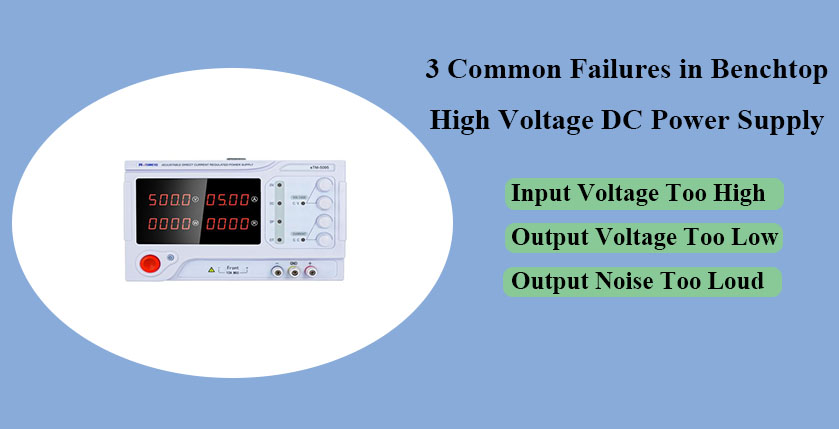
High Voltage DC Power Supply Input Voltage Is Too High
Check the AC input against the model’s permitted range before operation. Stop using the unit if the input is out of range. Output load conditions do not cause the AC mains voltage to become too high; do not add input components or arbitrary dummy loads as a repair.
DC High Voltage Power Supply Output Voltage Is Too Low
With output disabled and discharged according to the manual, inspect external connections. Low output can result from CC operation, protection trips, excessive lead drop or an unsuitable load. Verify ratings and settings; internal diagnosis or replacement belongs to qualified service.
High Voltage Power Supply Output Noise Is Too Loud
Compare measured ripple and noise with the model’s specified bandwidth and load conditions. Check external wiring and approved grounding. Do not replace internal inductors, add arbitrary capacitors or alter grounding as a generic repair procedure.
Explore our variable DC power supplies and compare output ranges and control options for your application.