
Test & Measurement Applications
Low-Noise DC Power Supplies for Sensor Testing
Give sensors and their signal-conditioning circuits a stable supply while measuring small signals. Low ripple, suitable current control and careful grounding help separate sensor behavior from power-related interference.
View Recommended Power Supplies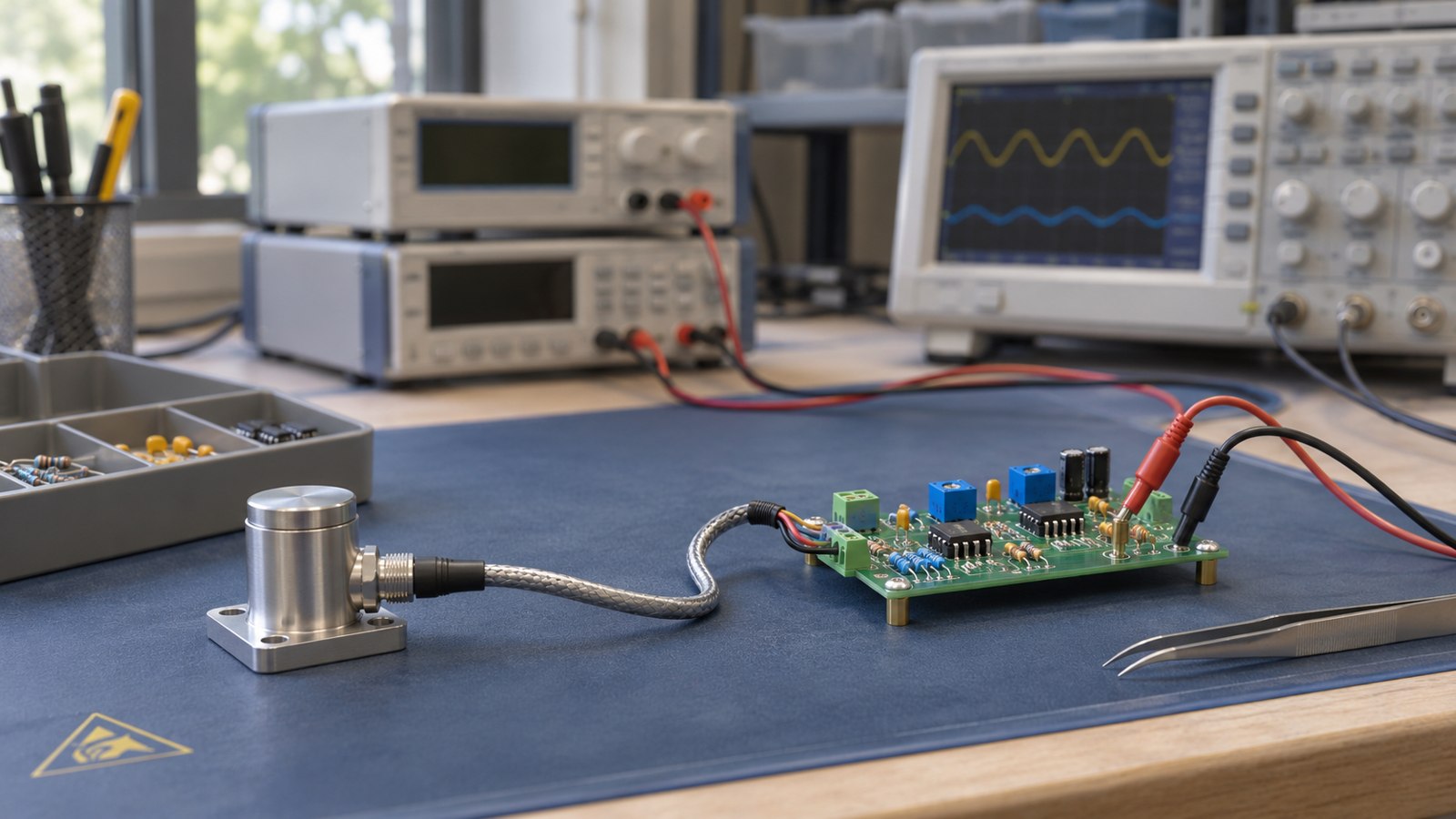
How Does the Power Supply Affect Sensor Measurements?
The source provides sensor excitation and powers conditioning electronics. Its stability, noise and grounding can influence small signals, so supply selection and measurement connections need to work together.
Power path: low-noise DC source → sensor excitation / conditioning electronics.
Signal path: sensor / conditioning output → DAQ or measurement instrument. Return and shield connections follow the grounding plan; they are not another stage after the DAQ.
Supply noise and grounding both influence the measurement. Evaluate the complete setup at the sensor connection over the bandwidth relevant to the test.
What to Consider When Choosing a DC Power Supply for Sensor Testing
Supply range and current
Sensor excitation voltage, electronics current, startup behavior and any multiple-rail requirement.
Noise and measurement bandwidth
Ripple spectrum, RMS/peak-to-peak limits, sensor sensitivity and instrument bandwidth.
Grounding and connections
Return paths, shield termination, lead drop, remote sensing and acquisition-system references.
Linear or switching supply?
A programmable linear supply is a useful starting point for sensitive bench measurements. A low-ripple switching model can suit higher power or wider voltage needs. Compare noise specifications at the same bandwidth and validate the complete setup against the sensor error budget.
What needs a separate channel?
Sensor excitation, analog conditioning and digital electronics may need different rails or separate sequencing. Independent outputs can improve flexibility, but the required isolation and grounding arrangement must match the circuit.
What should the measurement prove?
Record sensor output at representative supply voltages and loads. Check whether changes come from the sensor, excitation stability, cable drops or the acquisition reference. Use an instrument with sufficient resolution and bandwidth for the signal being measured.
Compare Power Supplies for This Application

eTM-L3010SPL+ 30V 10A Programmable Linear DC Power Supply
Linear power for sensitive test benches. 0–30V, 0–10A programmable linear output with low ripple/noise, CV/CC control and stored sequences. Suits sensor electronics whose supply range fits the model.
View Options & Buy Online
eTM-K6010SPL+ 60V 10A Programmable DC Power Supply
A wider programmable voltage range. 0–60V, 0–10A low-ripple switching output with Window List, Modbus/SCPI and front SENSE connections. Useful when excitation or associated electronics need more than 30V.
View Options & Buy OnlineETOMMENS DC Power Supplies for Sensor Testing
The L3010SPL+ combines low-ripple, low-noise linear output with programmable settings for sensitive sensor electronics. The K6010SPL+ extends the available positive voltage range to 60V. Stored sequences, communication configurations and model-specific SENSE connections help repeat excitation conditions and manage voltage drop in the test setup.
ETOMMENS serves small and medium-sized businesses, large enterprises and multinational groups, with customers across North America—including the United States and Canada—Europe and the Middle East.
Our DC power supply range supports laboratory development, equipment testing and production applications, with technical support and customized solutions for different project requirements.
Where to Buy DC Power Supplies for Sensor and Measurement Applications
You can buy ETOMMENS DC power supplies for sensor testing online at VariableDCPowerSupply.com. In-stock models dispatch within 1–3 business days after payment, with approximately 10 business days in transit. Free worldwide DDP shipping includes customs clearance, import duties and taxes.
Lead times for custom configurations are confirmed with the quotation.
Related: Programmable DC Power Supplies. Explore the wider ETOMMENS variable DC power supply range.
Frequently Asked Questions
Does a low-noise supply guarantee a quiet sensor reading?
No. Ground loops, shielding, reference noise and the measurement instrument can dominate. Evaluate the complete test setup at the sensor terminals.
Where are the exact ripple and noise figures?
Use the selected model’s technical specifications and measurement conditions. Numeric noise limits must be compared with the same bandwidth, loading and RMS or peak-to-peak definition.
Can the supply measure microamp sensor standby current?
A power source is not automatically a suitable low-current analyzer. Use the required measurement instrument when standby current is below the useful readback range or accuracy of the supply.
Can I automate supply-voltage sensitivity tests?
Yes, with a compatible programmable configuration. Coordinate settled voltage steps with sensor readings and use host software to record the result.