
A stable Variable DC Power Supply is crucial for precise electronics testing and experimentation. Output voltage fluctuations can significantly impact test accuracy. The variable bench power supply offer adjustable voltage and current, making them versatile tools for various applications. However, assessing their stability is essential to ensure reliable performance.
Importance Of Testing Benchtop Variable DC Power Supply Stability
Verifying the stability of benchtop power supplies is paramount for critical applications that demand precise DC power output. Unstable output can lead to inaccurate measurements, unreliable test results, and potential damage to sensitive electronic components. Testing the bench power supply’s stability ensures that the voltage remains within specified tolerances under varying load conditions and input fluctuations.
A stable DC bench power supply variable is essential for applications such as circuit debugging, component characterization, and calibrating test equipment. By regularly assessing the stability, engineers can identify potential issues, perform preventive maintenance, and ensure the integrity of their test setups, ultimately enhancing the quality and reliability of their work.
Best Ways To Test Bench DC Variable Power Supply Stability
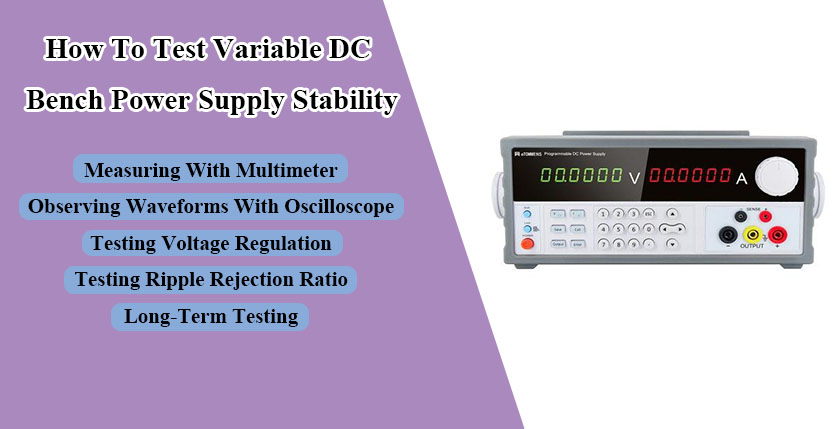
Measuring With A Multimeter
Use a multimeter to measure the output voltage of the variable voltage power supply under different load conditions. If the output voltage fluctuates only slightly within the acceptable range, it indicates that the voltage is relatively stable.
Observing Waveforms With An Oscilloscope
Use a suitably rated probe and the documented ripple/noise measurement bandwidth. For high or floating voltages, use appropriately rated differential or isolated measurement equipment; do not connect an earth-referenced probe ground to an arbitrary output terminal.
Testing Voltage Regulation
Measure line regulation only within the permitted AC input range using a controlled, appropriately rated test setup. Load regulation is a separate measurement made by changing the load while keeping input conditions fixed.
Testing Ripple Rejection Ratio
Characterize output ripple and noise using the supply’s specified test method. Do not inject ripple into the AC input unless following a documented engineering test procedure with suitably rated equipment.
Long-Term Testing
Monitor the bench top power supply over an extended period, observing changes in its output voltage under varying environmental temperatures and load conditions. If the changes are minimal, it indicates that the output voltage is relatively stable.
Conclusion
Testing the stability of a DC variable bench power supply is critical for accurate electronics testing and experimentation. Stability ensures precise voltage output, which is essential for applications such as circuit debugging, component characterization, and calibrating test equipment. Methods to test stability include using a multimeter to measure voltage fluctuations, observing waveforms with an oscilloscope, testing voltage regulation, evaluating ripple rejection ratio, and conducting long-term monitoring under varying conditions.
ETOMMENS Variable Bench Power Supply excels in these aspects, offering reliable performance with adjustable voltage and current, making it a versatile tool for a wide range of applications. Its superior stability ensures accurate measurements, reliable test results, and protection for sensitive electronic components, thereby enhancing the quality and reliability of your work.